
Read the garage before moving parts
Find the car, the main component families, and the driving position. Part locations can be patch-sensitive, so use visible labels and the current car state rather than memorizing one old layout.
Follow an A desrt first-drive sequence: inspect and repair the car, check fuel and controls, test near the garage, pack supplies, and keep a recovery margin.
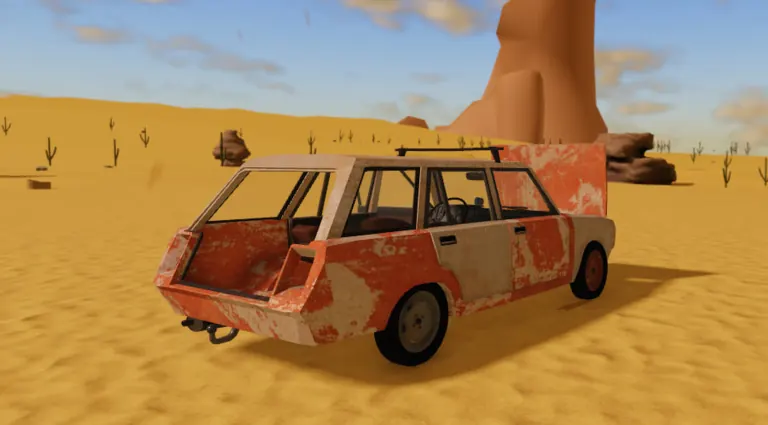 OFFICIAL GAME ART
This page is a first-run sequence, not the full troubleshooting manual. If the car does not respond, move to the symptom-first no-start page instead of expanding every system check here.
These are planning conditions, not hidden gates or guaranteed item requirements.
Find the car, the main component families, and the driving position. Part locations can be patch-sensitive, so use visible labels and the current car state rather than memorizing one old layout.
Install the core drive component, follow the current labels for fuel or required support items, and confirm loose parts are seated rather than merely nearby. Keep this pass focused on getting one safe start attempt.
Finding fuel before setting off is part of the official game premise. Exact engine pairings and consumption are not supplied here, so follow what the current item and vehicle visibly accept.
Enter the driving position and press R. That is the engine-start input stated by the game. If the car does not respond, stop repeating the same attempt and use the ordered no-start check.
Move only far enough to confirm steering, power, and basic vehicle behaviour. Return or stop while recovery is still easy if the car sounds, moves, or handles differently than expected.
If the current client exposes an explicit save control, run the focused persistence check. Otherwise record the working vehicle state and leave only with a route, reserve, and recovery plan.
Better move: Run a short test and recheck fuel, power, fluids, controls, and recovery options.
Better move: Confirm drive-critical systems first, then add travel or completeness pieces.
Better move: Use direction cues and a turnaround threshold because the world is procedural.
Better move: Read the current labels and behaviour before spending your supplies.
Open the seven-check diagnostic and stop at the first condition you have not confirmed.
Open the focused pagePut it down, inspect the target and current controls, then retry without stacking more guesses.
Stop extending the route, recover a recognizable cue, and preserve enough fuel or supplies to retreat.
Open the focused pageConfirm the core systems, sit in the driving position, and press R, the start input listed by the game.
Complete a short vehicle test near the garage, then choose one visible stop you can reach and recover from.
The official description calls the world endlessly procedurally generated, so do not depend on one universal route.
The official description supports single-player and multiplayer. Agree on roles before the crew leaves the garage.